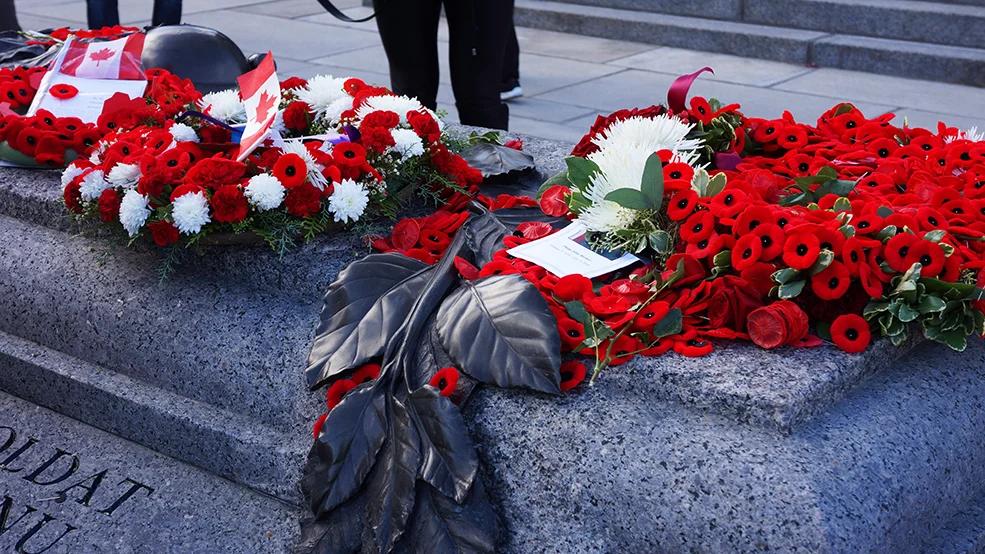
Remembrance Day
I have clear memories of the students at Elgin Avenue Public School in Simcoe, Ontario, being gathered by dedicated and faithful teachers to attend the Remembrance Day Service at the Cenotaph near downtown Simcoe. Hundreds of young people stood in the cold on November 11th to “remember.” For most of us, we were not remembering, but relying on the stories we had been told by veterans who “could” remember. Their experiences informed our understanding of what war was like for those who fought for freedom and those who gave their lives to ensure our freedom.
I remember standing at the cenotaph thinking, “Why are we here? What is this all about?” As a Grade 8 student, I was only beginning to develop some critical thinking skills. I do remember listening carefully to the veterans share their experiences and being quite moved by their words and emotions.
There were two clear messages being shared. The first was that there was NO choice but to go to war and defend our country. The second message was that although the soldiers were trained and stood ready to fight again, they preferred that diplomacy and dialogue be considered first before force.
Each year, we gather at war memorials to pray, hear Scripture, and remember the tremendous cost of war.
Like you, I continue to wear a poppy as a symbol of respect and admiration for those who have served and continue to serve in the Armed Forces of Canada.
“Four Canadian Armed Forces members died and 39 others were injured in a fire-related training accident at CFB Wainwright in Alberta on October 17, 2026.”
It was this incident that made me realize there was a factor that we never consider. Our soldiers risk their lives to train for potential battles from the moment they take their oath; they are committed to a potentially deadly endeavour.
I not only have sympathy for the families but also a deep sense of compassion for the injured. We need to honour the dead and pray for the healing of those who were injured.
This incident brings to the forefront the terrible reality for those who fight for our freedom and peace. This year, I will be far less likely to complain about the cold and much more intent on listening for the names of those who lost their lives so that you and I can have political and religious freedoms.
It all begins with a deep and profound sense of gratitude. Although my approach to this reflection may seem a little unorthodox, I think the point is that we need to continue educating our children about conflict resolution and the distinct possibility of national and international conflicts, perhaps starting with the children in Grade 8.
The Rev. Canon Dr. Stephen Hendry